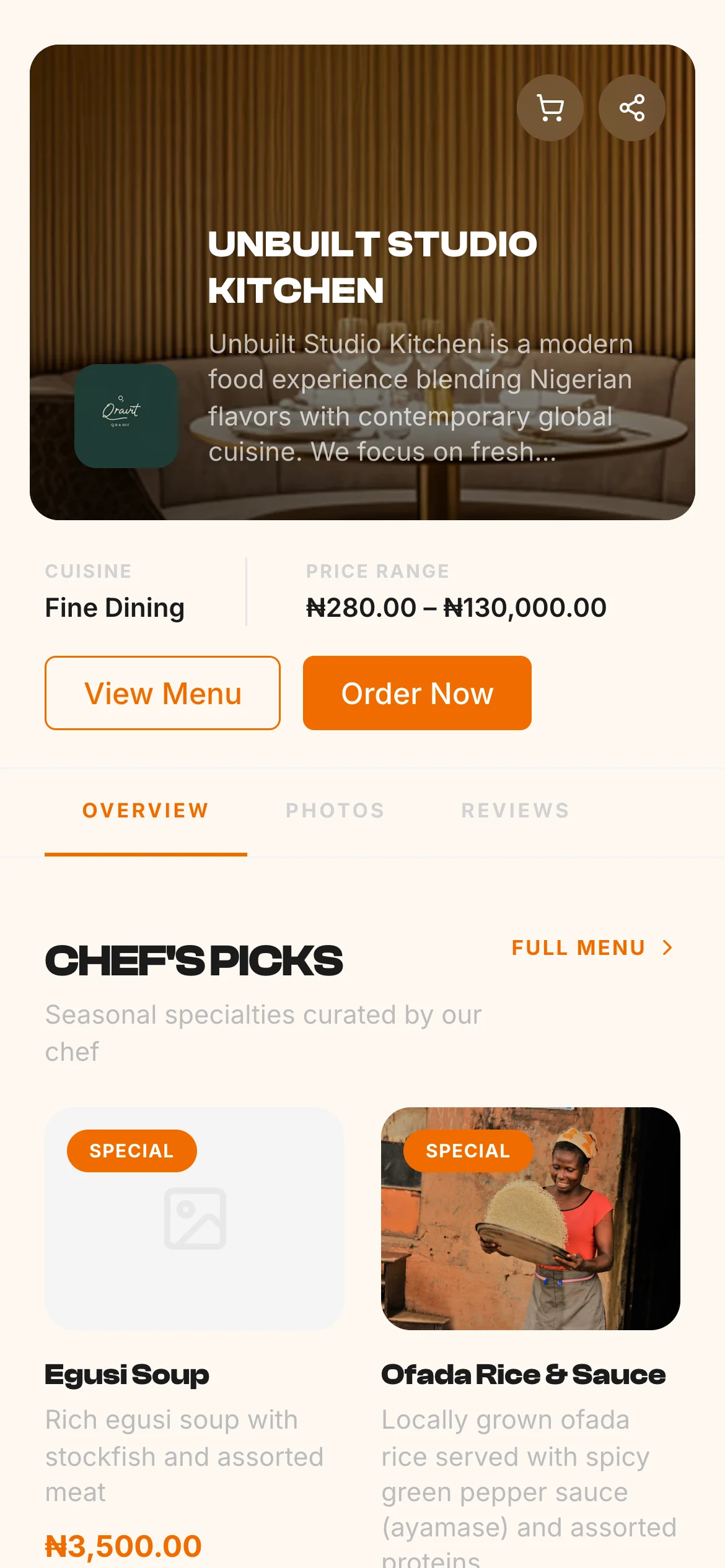
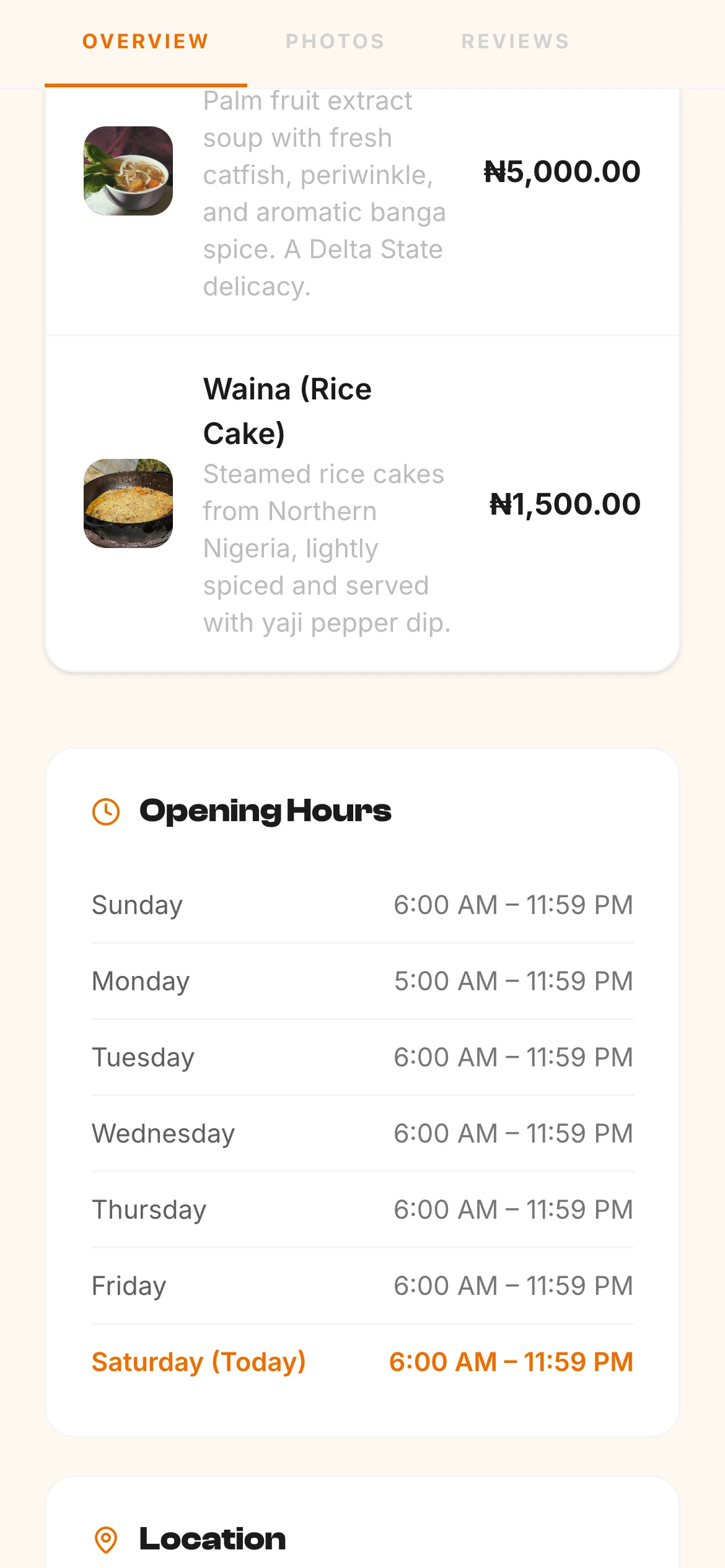
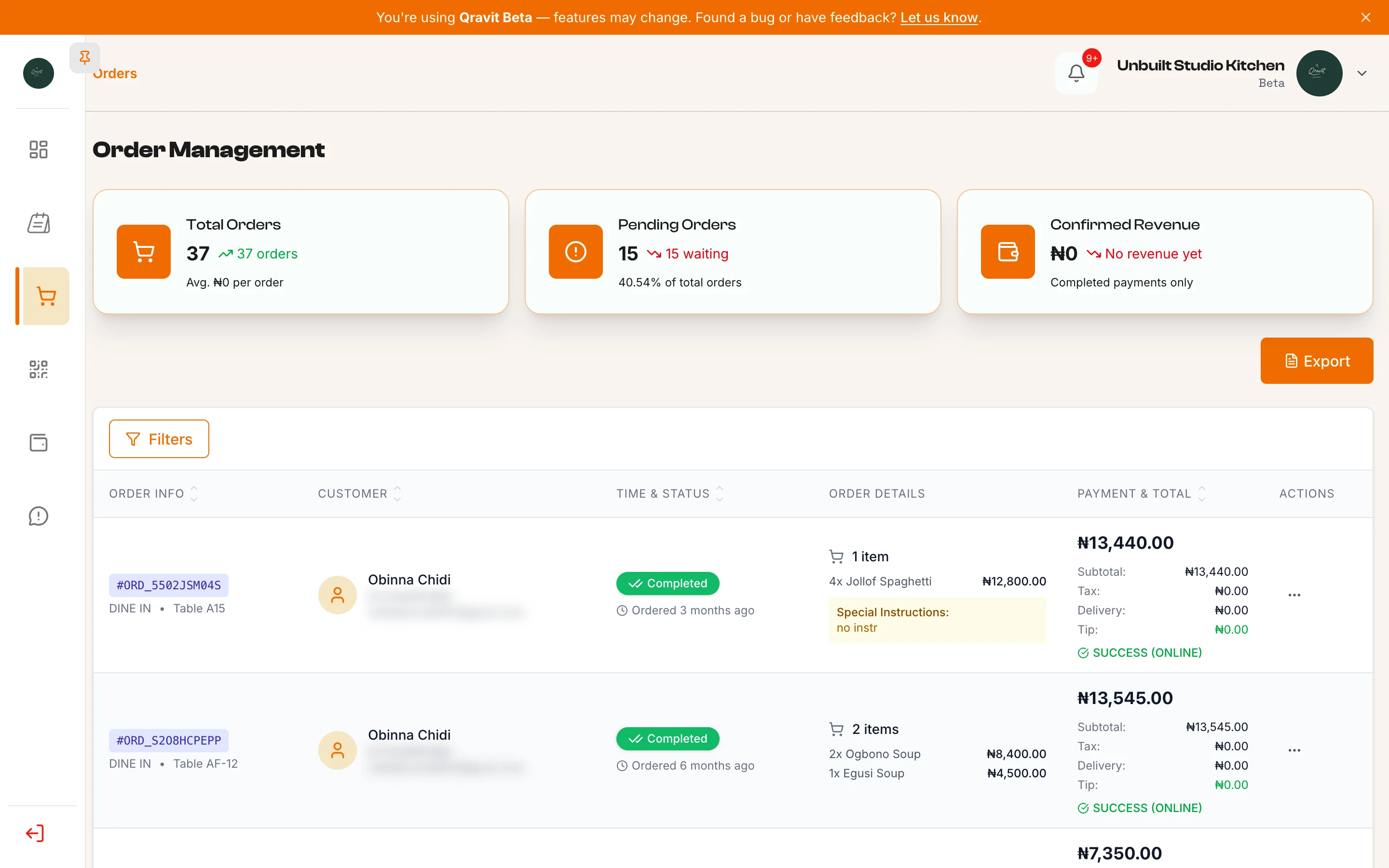
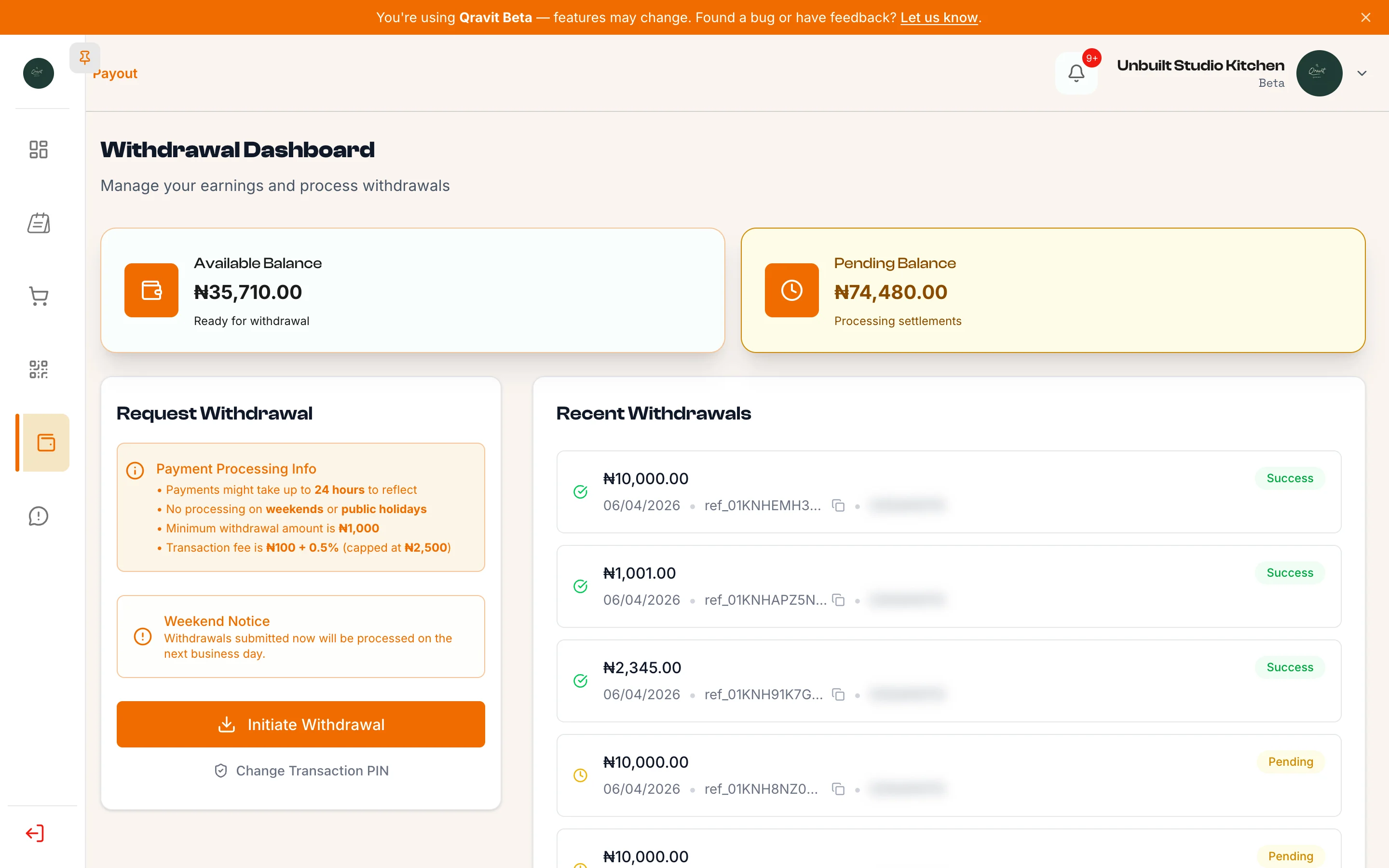
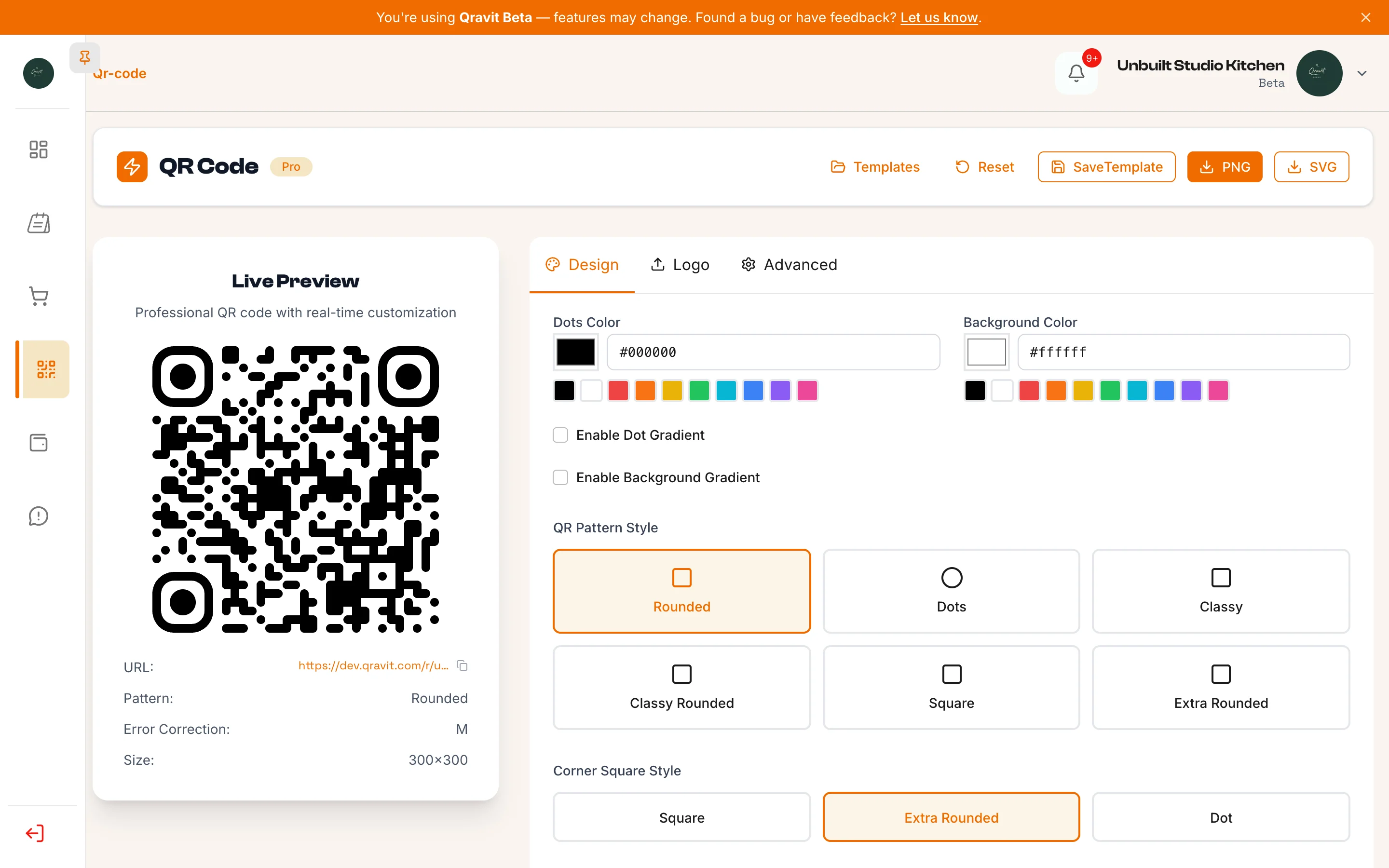
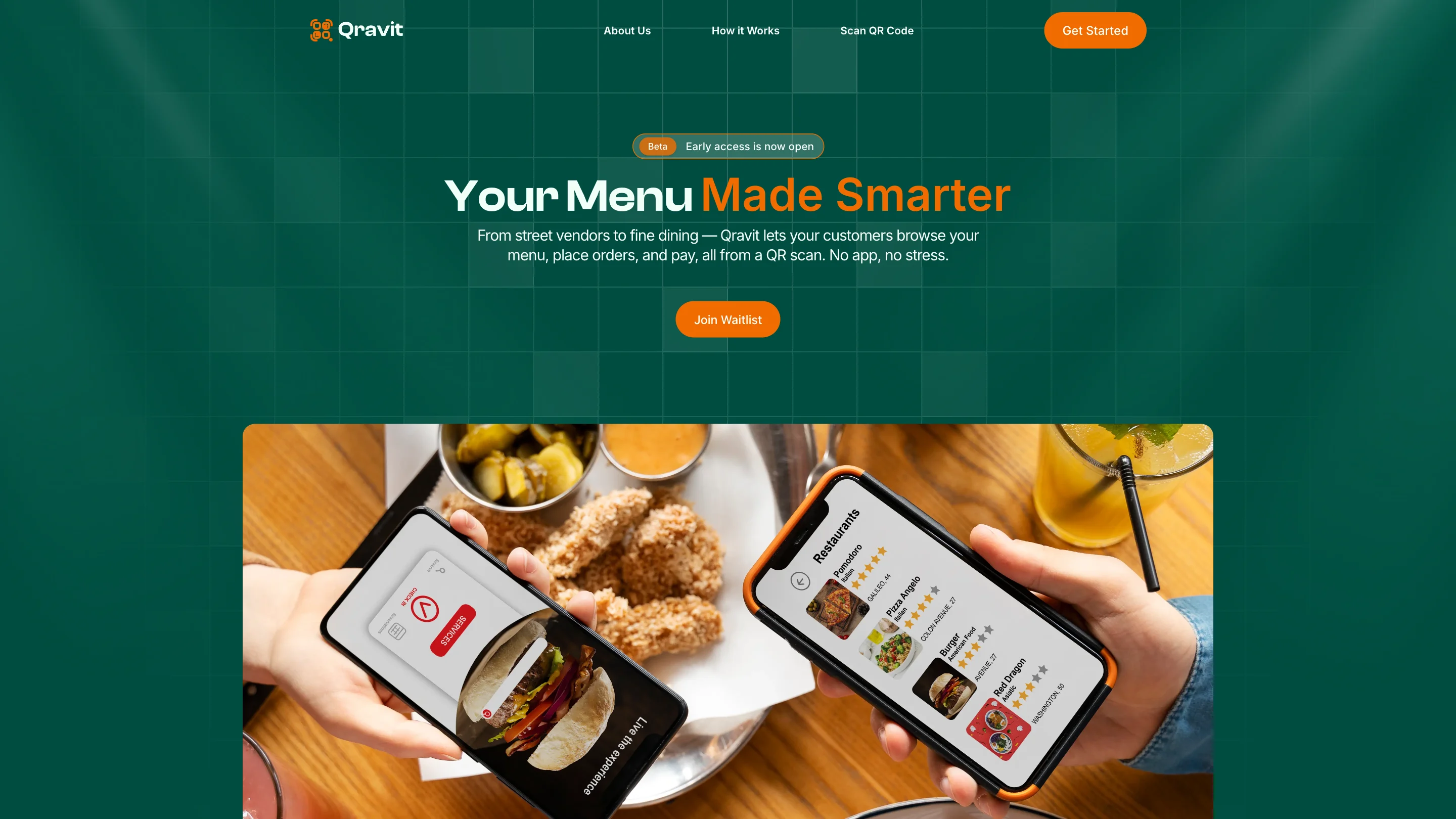
Guests scan the QR code on the table, browse the menu on their own phone, order and pay by card. Restaurants get a dashboard for menus, orders and QR codes, plus a wallet they withdraw to their bank. Behind both sits an admin panel for the Qravit team.
The brief
Printed menus in Nigeria are expensive to reprint and out of date the moment a price moves. Qravit puts the menu behind a QR code on the table so it changes whenever the kitchen does.
It had to work for a street vendor and a fine dining room, on any phone, with no app to download. And it had to serve three different people at once: the guest at the table, the owner running the place, and the Qravit team running the platform.
The hard part
Money moves in two directions through Qravit. Card payments come in from guests who will never make an account, and earnings go back out to restaurant bank accounts through an approval step. Both paths have to agree on what a paid order is, even when a payment succeeds and the network drops before anyone hears about it.
What we built
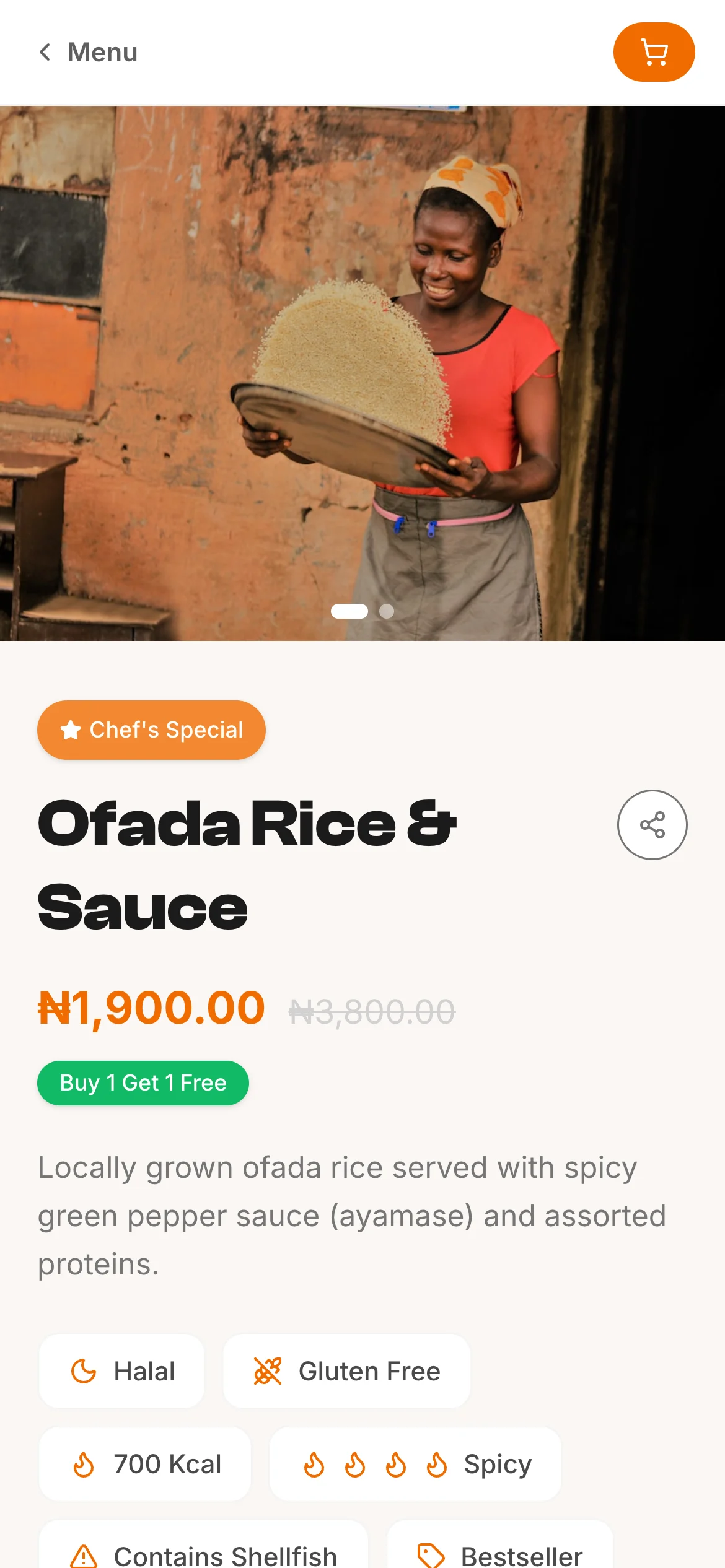
- A guest ordering flow that opens from a scan, organised by category with photos, descriptions and prices, with no sign-up in the way.
- Paystack checkout, so a guest can pay by card the moment the order is placed.
- A restaurant dashboard for menus, orders, QR codes, team members and notifications, with branding the owner controls.
- A wallet, where restaurant earnings collect and get withdrawn to a bank account.
- An admin panel for the Qravit team: platform oversight, restaurant management and payout approval.
- Per-restaurant SEO, with server rendering, dynamic metadata and JSON-LD for each venue.
- An installable PWA, so the dashboard behaves like an app on a phone.
Where it is now
- Live at qravit.com, running on AWS
- In active development since March 2025
Tell us what you want to exist. We'll reply with how we'd build it, roughly how long it takes and what it costs.